

A growing Local Economy, the Mbororo displaying their goods in Kerwa trading Centre, Liwolo payam Kajokeji County. (Photo by Denis Logonyi)
By Denis Logonyi
For many years, the Falata, commonly known as the Mbororo, have migrated across West and Central African countries, making various stops in search of pasture and water.
While often viewed through the lens of conflict and migration, their presence has also brought unexpected economic opportunities to some of the communities they interact with.
Although opinions about these pastoralists remain divided, many residents in South Sudan’s KajoKeji County report that the Mbororo have helped revive local trade and business. Furthermore, their presence has encouraged local residents who had fled conflict to Uganda to return home contradicting earlier reports of violence in with some communities.
The Mbororo travel in large groups with their families, livestock, and belongings, following seasonal grazing routes. Their journey has taken them from Sudan through Western Bahr el Ghazal (Raja), the Democratic Republic of Congo (DRC), and Western Equatoria state, and are now in KajoKeji County within Central Equatoria state.
For Musa, a herder in his fifties, this journey is about survival and the economic pride of his cattle. Speaking in Arabic, he explains that their primary goal is to find pasture for their animals and improve the welfare of their families.
He says that he moved from Western Bahr el Ghazal to Central Equatoria State, where he has found peace and a market for their sheep in the border area between KajoKeji County in South Sudan and Yumbe District in Uganda.
I had a brief but candid conversation with him when he came to Wudu town accompanied by his wife to collect food items for his family. Dressed in his herding attire and gumboots, he looked frail after a long walk in the bush, but he shared that this is simply a part of their life.
“Our journey is never easy, we face hostility from some communities, cattle raiding, and government restrictions. Everywhere we go, we are asked to pay money. God gave everyone grass so why should we pay just to graze our cattle?” Musa questioned.
Despite the challenges, Musa notes that they frequently engage local authorities and landowners to avoid conflict and maintain peaceful relations with host communities. At times, they pay $500 USD to these host communities for grazing their cattle.
When food or money becomes scarce, they sell sheep and goats to local residents to buy essential commodities. Camels are also occasionally used to transport supplies during their long migrations.
While South Sudan has similar cattle-keeping communities, they only migrate within the country. A key difference is that they are often armed, which deters the Mbororo.
Loku Dieri, a Mundari pastoralist with cattle in the Lainya County corridors, shares that their relationship with the Mbororo is generally good. However, he notes that the Mbororo are reluctant to crossbreed their cattle.
“We do not touch the cattle of a visitor. They are peaceful and when we go to them to request for the support they give us but they don’t want us near their girls,” he narrated.
In Kerwa Boma of KajoKeji County, the Mbororo are no longer known only as cattle keepers. Some have opened small businesses, while others operate boda boda’s an activity that was previously uncommon among them.
Their presence has transformed the once-quiet trading center, where shops stocked with clothes, food, and household goods now serve both local residents and the pastoralist community.
Once a rebel stronghold and later a border conflict area between Uganda and South Sudan, Kerwa has become a beacon of business, peace, and unity for the Aringa communities of Yumbe district and Kuku communities of KajoKeji County following this economic boost by the Mbororo.
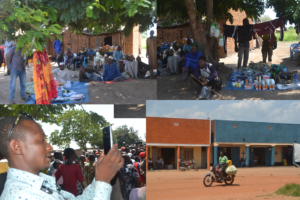
![Wudu town of KajoKeji County before and after the 2016 conflict [Photos by Denis Logonyi]](https://classicfm924.com/wp-content/uploads/2026/07/wudu-town-2-300x200.png)
Wudu town of KajoKeji County before and after the 2016 conflict [Photos by Denis Logonyi]
“When they come to the market, they buy goods in bulk, “Traders often have to restock the following day. They pay in cash and rarely buy on credit, which is good for business,” says Moses.
Inyani notes that growing commercial activity has encouraged some South Sudanese refugees in Uganda to return home and invest in businesses that locals were not previously engaging in, which has consequently grown the tax base.
However, he emphasizes that visitors must continue to respect local laws and customs to ensure peaceful coexistence continues.
![A member of the Mbororo and his wife taking a Boda Boda at Wudu town after buying goods from the market [photo by Denis Logonyi]](https://classicfm924.com/wp-content/uploads/2026/07/mbororo-wudu-300x174.png)
A member of the Mbororo and his wife taking a Boda Boda at Wudu town after buying goods from the market [photo by Denis Logonyi]
“When they hire us, they pay immediately and don’t bargain much, businesses always good whenever they come to the town.”
Women’s leader in KajoKeji County, Keji Mary, admits she once feared the Mbororo due to false rumors that they could turn into wild animals, though these stories have since been dispelled.
“But after meeting them, we realized many of those stories were different from reality, when their cattle destroy crops, they compensate the owners,” she says, adding,” That helped us build a good relationship.”
Despite the positive economic impact reported by many residents, the future of the Mbororo in KajoKeji remains uncertain.
In June, during an official visit to the area, Central Equatoria State Governor, Emmanuel Adil Anthony, ordered the pastoralists to leave, citing concerns over migration and land.
Governor Adil stated that the cattle keepers are causing havoc and directed local authorities to question their motives.
“I have seen the Mbororo here and I don’t know why the chiefs don’t want to talk about them. Mbororo is giving you milk, meat and money now you think they are your friends in case of any issue you question the government” Adil stated.
He also ordered the cancellation of any existing agreements made with the Mbororo by chiefs, payam directors, or residents.
“I met the Mbororo and were telling me everything is ok in KajoKeji, and that they are staying well, but other locals are complaining. They should go back to their places of origin in peace and not by force,” he reiterated.
In response, Musa stated that the governor’s order is unrealistic, explaining that they have no intention of settling permanently and only wish to survive like anyone else.
“We are not here to stay forever, we will move, we can’t leave immediately because our businesses and children are here with us, let the Governor allow us to stay,” he appealed.

A photo Mzee Alli a Head chief of Liwolo payam (photo by Denis Logonyi)
In Liwolo payam, where many Mbororo are staying, Chief Mzee Ali reports that the pastoralists have generally respected local rules and are living in peace with the host community.
“They appeared from nowhere, but they have not fought with our people, like other pastoralists that steal our cattle. They follow our local rules, and that has made coexistence easier,” he informed
While he does not object to their way of life, he noted one concern: some herders sprinkle salt on grazing areas to attract cattle, a practice he believes may negatively affect soil quality.
Additionally, Mzee Ali mentions that locals from Mijale are now crossing into South Sudan for trade, which has improved relationships with the communities across the border.
In Uganda, the Mbororo find it difficult to cross the border due to strict control by the Uganda Peoples’ Defense Forces (UPDF). However, they find it easier to roam in South Sudan and the Democratic Republic of the Congo due to lesser restrictions and unmanned borders.
According to cattle migration expert Makur Abraham, the movement of Mbororo pastoralists through South Sudan is primarily driven by the search for grazing land and water rather than conflict.
He noted that Central Equatoria State is hospitable, which contributes to their sense of security.
“Their life is concentrating on the cattle, their life is based on the cow. That is their income,” he says.
Abraham shared that during meetings with the Mbororo leaders, they noted they rarely sell breeding cattle because these animals are essential to their livelihoods.
“With the heifer and the cow itself, they don’t give that one because it is their life. That is their culture, they are more likely to sell sheep and goats.”
Regarding relations with host communities, he stated that the pastoralists generally keep to themselves and remain focused on accessing pasture and water.
He notes that while many travel without passports, they are supported by some modern Mbororo who speak English and assist with translation.
Additionally, Abraham mentioned that although cattle raiding occurs among cattle-keeping communities in South Sudan, attacking the Mbororo is very difficult because the herd is highly attached to them.
“These people believe in their gods, and the cattle only listen to them in their language which has defeated our communities from driving the cattle away. They can sell the sheep and goats but not the cow” he noted.
The Falata, also known as the Fulani, Fellata, or Mbororo, are nomadic pastoralist communities whose origins trace back to West Africa, including present-day Mali, Mauritania, Cameroon, and Nigeria. Over decades, many migrated across the Sahel into Sudan, where some settled in the Blue Nile region during the 1950s before continuing seasonal movements into South Sudan.
They are renowned for herding long-horned cattle and maintaining a centuries-old tradition of transhumance seasonal migration in search of pasture and water.